Why we bake on the 13th.
Forty students at Princeton Theological Seminary were sent next door to give a short talk. On the way they passed a man slumped in a doorway, coughing. The researchers had put him there.
Guess first.
Each student was told how much time they had. Fill in the slip. No peeking.
Your guess
It came down to a clock.
Being told they were late mattered most. How religious they were didn’t predict who helped.
“Oh, you’re late. They were expecting you a few minutes ago…”
10%helped: 1 of about 10
Each cookie is one student. Small groups, never re-run; sizes worked out from the paper’s percentages.
They were torn.
Afterward, almost every hurried student mentioned the man in the doorway. Some hadn’t taken in that he needed help. Others saw him and kept going, anxious, with someone waiting on them. The researchers wrote:
“Conflict, rather than callousness, can explain their failure to stop.”
31 And by chance there came down a certain priest that way: and when he saw him, he passed by on the other side.
32 And likewise a Levite, when he was at the place, came and looked on him, and passed by on the other side.
33 But a certain Samaritan, as he journeyed, came where he was: and when he saw him, he had compassion on him,
It stays on this page.
So we wrote it into the recipe.
Each step answers something that keeps people walking past.
Method
The Thirteenth Cookie
Makes one new friend. Tap a step for the research.
Only 25% of people walking and talking on a phone noticed a clown ride past on a unicycle. With the 13th on the calendar, you go out already looking.
Hyman et al., 2010
Told “you’re late,” 1 in 10 helped. In a 1978 follow-up, it mattered whether someone was counting on them to arrive. Bake on the 12th and the cookie is already your errand.
Darley & Batson, 1973; Batson et al., 1978
In 9 of 10 public arguments and fights caught on camera, at least one bystander helped. The thirteenth makes the helper you.
Philpot et al., 2020
Strangers handed a hot chocolate rated their mood 3.5 (on −5 to +5). The people giving it guessed 2.7. It lands better than you think.
Kumar & Epley, 2023
In a week of talking to strangers, 87% of 1,336 conversations were with the very first person approached. Ask their name, and remember one thing they love.
Sandstrom, Boothby & Cooney, 2022
Take this call.
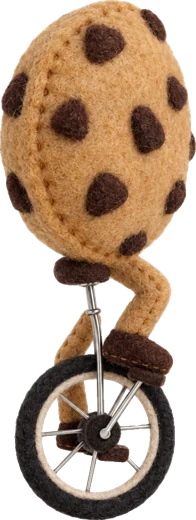
You’re on that call, walking. Did anything go by?
Less time in the same room.
Minutes a day with friends in person, ages 15 to 24, 2003 to 2020. U.S. Surgeon General, 2023. The drop began long before the pandemic.
Young Americans’ empathy went up from 2008 to 2018, the latest data. A cookie is a reason to be in the same room.
Keep score in your notebook.
People guess low about how much a small kindness lands. So do kids as young as 8. Try a home version of their test: guess before, ask after.
Stays on this phone: two numbers a month, nothing about the person.